


 Deutsch
 English
 Español
 Français
 Nederlands
 Português


 Share
Share




China's tightened export controls on rare earths and critical minerals, implemented between October 2025 and March 2026, have triggered price spikes of up to sixfold outside China, with licensing approval rates for European firms falling below 25%. This strategic move has reshaped global supply chains, prompting the United States to launch FORGE (Forum on Resource Geostrategic Engagement) and Project Vault — a $10 billion strategic reserve — while signing 21 bilateral critical minerals deals in just five months. The crisis underscores a fundamental question: can Western countermeasures close a processing gap that experts estimate could take 20 to 30 years to rebuild?
China's Dominance in Rare Earth Processing
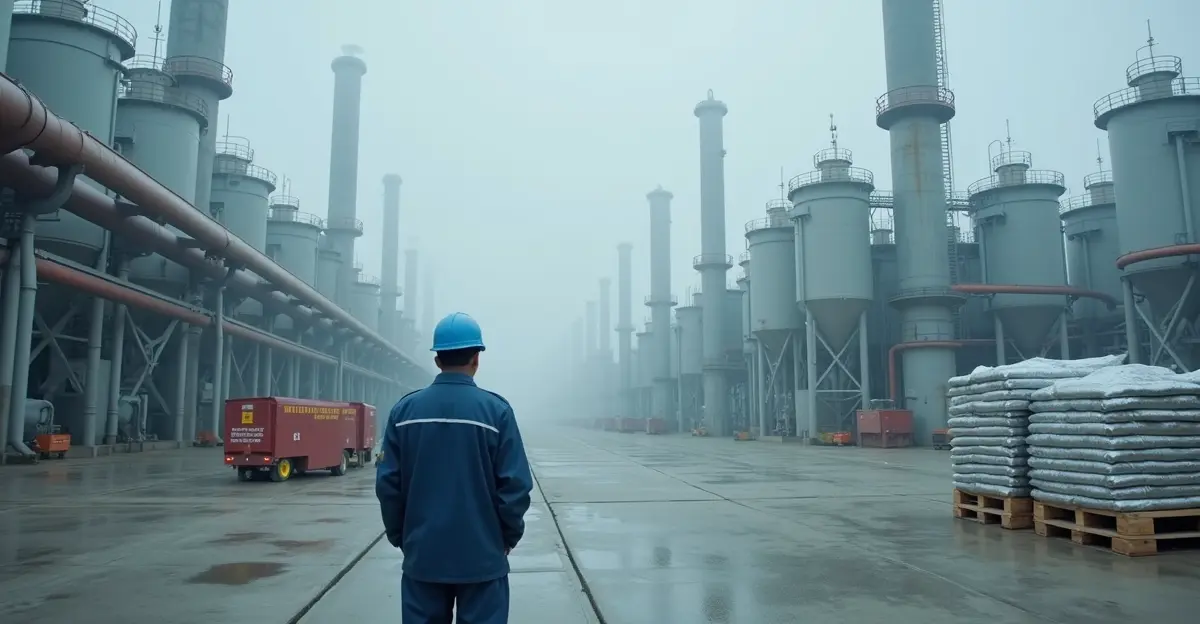
China controls approximately 70% of global rare earth mining and an extraordinary 90% of refining and processing capacity, according to a 2026 Griffith Asia Institute study. This dominance is not accidental but the result of a deliberate, decades-long strategy. Beijing has invested billions since the 1980s to build an integrated supply chain spanning mining, separation, refining, and permanent magnet production — where China now controls 94% of global output. The rare earth processing monopoly gives China unparalleled leverage over industries critical to defense, electric vehicles, renewable energy, and advanced electronics.
Export controls introduced in 2025 under MOFCOM Notice No. 61 expanded licensing requirements to cover a broader range of rare earth products, including samarium, dysprosium, and terbium. By early 2026, European firms reported that fewer than one in four license applications were approved, effectively strangling supply to Western markets. Neodymium-praseodymium (NdPr) oxide, a benchmark material, surged from around $80 per kilogram in 2024 to over $480 per kilogram in early 2026 — a sixfold increase.
Western Countermeasures: FORGE and Project Vault
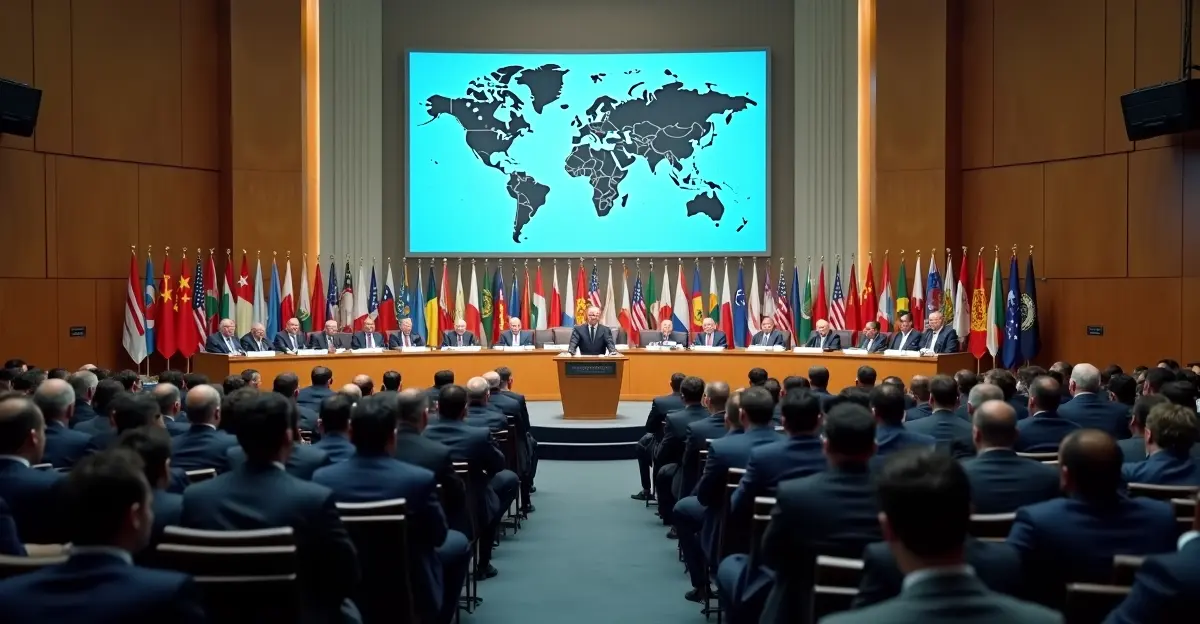
In response, the United States has launched an unprecedented diplomatic and industrial push. On February 4, 2026, the U.S. Department of State hosted the Critical Minerals Ministerial, bringing together representatives from 54 nations and the European Commission. Secretary of State Marco Rubio announced FORGE (Forum on Resource Geostrategic Engagement) as the successor to the Minerals Security Partnership, chaired by the Republic of Korea. The forum aims to coordinate allied investment in diversified supply chains and reduce dependence on Chinese processing.
Simultaneously, the Export-Import Bank of the United States (EXIM) launched Project Vault, a $12 billion public-private initiative (including a $10 billion EXIM loan and nearly $2 billion in private investment) to establish a U.S. Strategic Critical Minerals Reserve. Modeled after the Strategic Petroleum Reserve, Project Vault will stockpile essential raw materials in secure facilities across the country to protect domestic manufacturers from supply shocks. EXIM Chairman Jovanovic promoted the initiative on CNBC and Bloomberg, emphasizing that it ensures American industry has uninterrupted access to critical minerals.
The U.S. has also signed 21 bilateral critical minerals frameworks or memoranda of understanding in the five months leading up to the Ministerial, with countries including Argentina, Morocco, the Philippines, the UAE, and the United Kingdom. These deals aim to secure upstream mining rights and encourage downstream processing partnerships. The U.S. critical minerals diplomacy has mobilized over $30 billion in government financing for strategic mineral projects.
The Processing Gap: A 20-30 Year Challenge
Despite these efforts, experts warn that rebuilding independent processing capacity outside China could take two to three decades. The Griffith Asia Institute study cautions that Western strategies focusing solely on new mines — without parallel investment in separation, refining, and magnet manufacturing — will fail. China's control extends extraterritorially: export licenses are now required for products containing Chinese-origin rare earths, effectively extending Beijing's reach across global supply chains.
Mick McMullen, a veteran mining executive, told Fortune that "China is the leader, and the U.S. is far behind." The country has spent billions since the 1980s building its supply chain dominance, and specialized processing technology remains tightly controlled. The critical minerals supply chain vulnerability is most acute in Europe, where over 80% of companies depend on Chinese sources for materials essential to defense, EVs, and renewable energy.
Impact on Defense, EV Manufacturing, and Strategic Autonomy
The weaponization of mineral supply chains has direct consequences for national security and industrial competitiveness. Rare earths are essential for permanent magnets used in electric vehicle motors, wind turbine generators, and advanced military systems including missile guidance, radar, and night vision equipment. The Pentagon has identified rare earth supply as a critical vulnerability, with the National Defense Stockpile receiving $2 billion in new funding under the Trump administration.
For the EV industry, the price surge threatens to undermine the economics of battery manufacturing and permanent magnet production. Automakers face higher costs and uncertain supply, potentially slowing the transition to electric mobility. The European Union's Critical Raw Materials Act has selected 60 Strategic Projects, but financing volumes remain insufficient for the scale of diversification needed.
The IMF's April 2026 World Economic Outlook warned that geopolitical fragmentation — including the weaponization of critical mineral supply chains — poses a significant downside risk to global growth. The report noted that wars and supply disruptions cause large, persistent output losses exceeding those from financial crises. The geopolitical fragmentation economic impact could reshape global trade patterns for decades.
Expert Perspectives
Christoph Nedopil, lead author of the Griffith Asia Institute study, argues that China is weaponizing control rather than scarcity. "Beijing uses temporary, reversible restrictions to maintain pricing power and extract strategic concessions while discouraging large-scale Western alternative investment," he said. The study outlines three strategic paths for Western nations: managed dependence, costly independence, or a hybrid model balancing resilience and realism.
The geopolitical window for action may be only 12 to 18 months, according to the multi-institutional analysis published by Rare Earth Exchanges. If Western nations fail to make decisive investments in processing capacity during this period, China's stranglehold could become irreversible.
Frequently Asked Questions
What are rare earth elements and why are they important?
Rare earth elements are a group of 17 metallic elements essential for manufacturing high-tech products including smartphones, electric vehicle batteries, wind turbines, and military defense systems. Despite their name, they are relatively abundant but difficult to process.
How much of the world's rare earth processing does China control?
China controls approximately 90% of global rare earth refining and processing capacity, along with 94% of permanent magnet production. This dominance is the result of decades of strategic investment.
What is Project Vault?
Project Vault is a $12 billion U.S. public-private initiative led by the Export-Import Bank to establish a Strategic Critical Minerals Reserve, modeled after the Strategic Petroleum Reserve, to protect domestic manufacturers from supply disruptions.
How long would it take to rebuild rare earth processing outside China?
Experts estimate it could take 20 to 30 years to rebuild independent processing capacity outside China, given the specialized technology, infrastructure, and expertise required.
What is FORGE?
FORGE (Forum on Resource Geostrategic Engagement) is a U.S.-led diplomatic initiative announced in February 2026 as the successor to the Minerals Security Partnership, aimed at coordinating allied investment in diversified critical mineral supply chains.
Conclusion: A Defining Strategic Challenge
The 2026 rare earth export crisis represents the defining strategic supply chain story of the decade. China's stranglehold on processing — built over 40 years — cannot be quickly replicated. While U.S. initiatives like FORGE and Project Vault, along with 21 bilateral deals, signal serious intent, the gap between ambition and capability remains vast. The next 12 to 18 months will determine whether Western nations can forge a viable path to strategic autonomy or remain dependent on Beijing's goodwill. The future of critical mineral supply chains will shape global power dynamics for generations.




Follow Discussion